

Industrial Cleaning
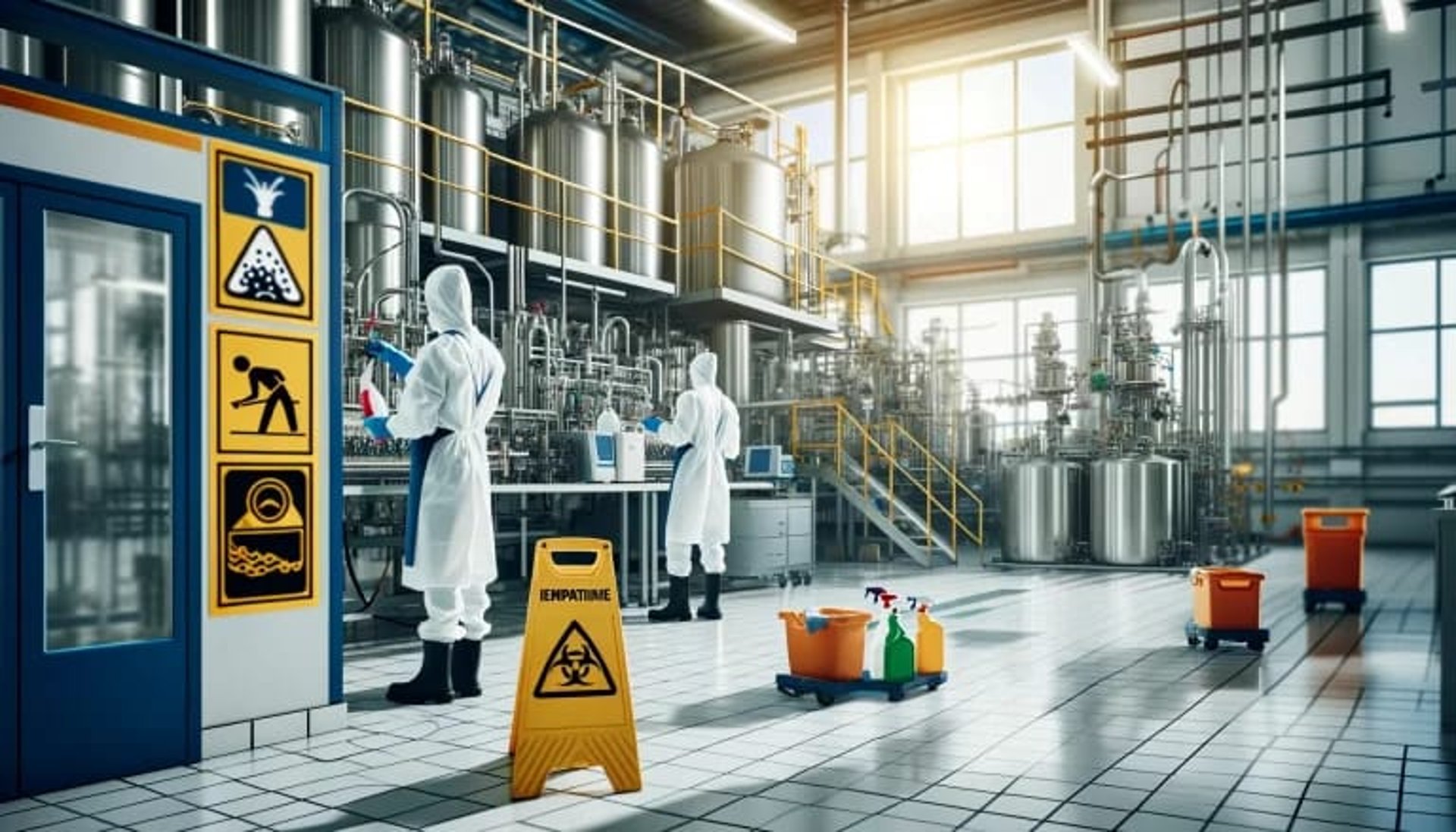
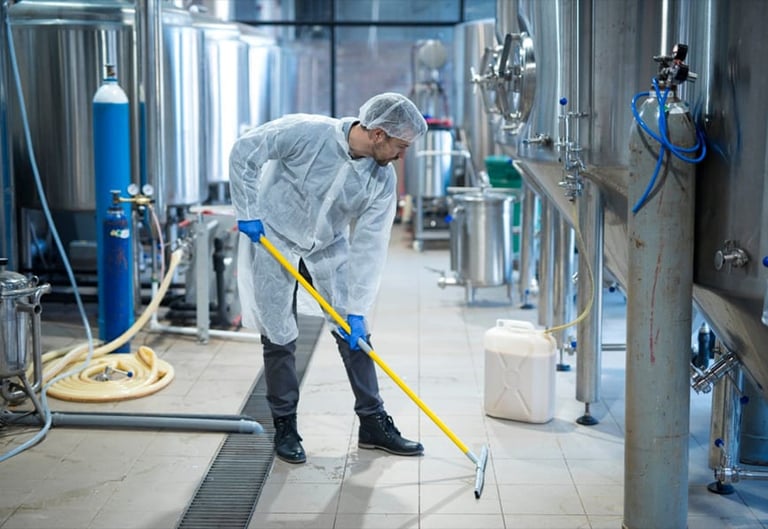
Industrial cleaning refers to comprehensive cleaning practices carried out at regular intervals to enable production facilities such as industrial plants, factories, warehouses, workshops, and power plants—as well as large-scale enterprises—to operate more efficiently, comply with occupational health and safety standards, and extend the service life of machinery and systems.

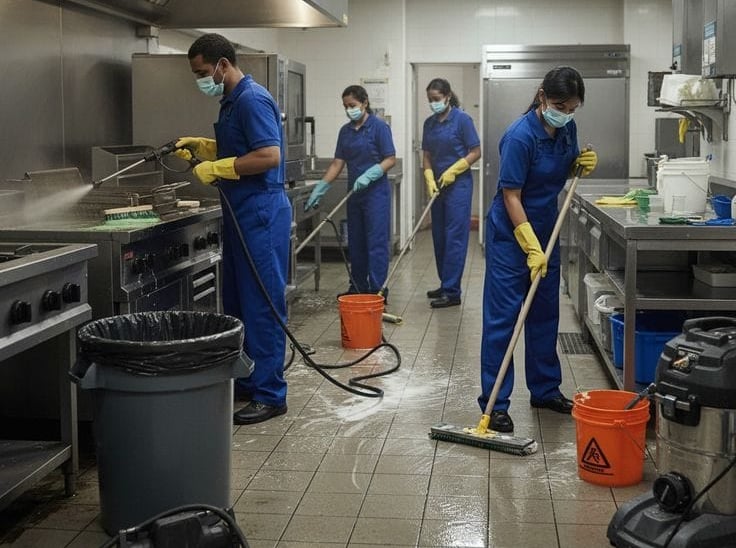
Key Features:
Comprehensiveness:
Covers not only general areas but also production machinery, floors, cable trays, storage systems, and industrial waste.
Purpose:
Aims to eliminate stubborn production-related contaminants such as dirt, grease, rust, deposits, and corrosion.
Methods:
Generally carried out in two main stages: mechanical cleaning (high-pressure water jetting, abrasive blasting, hand tools) and chemical cleaning (specialized industrial chemicals with solvent properties).
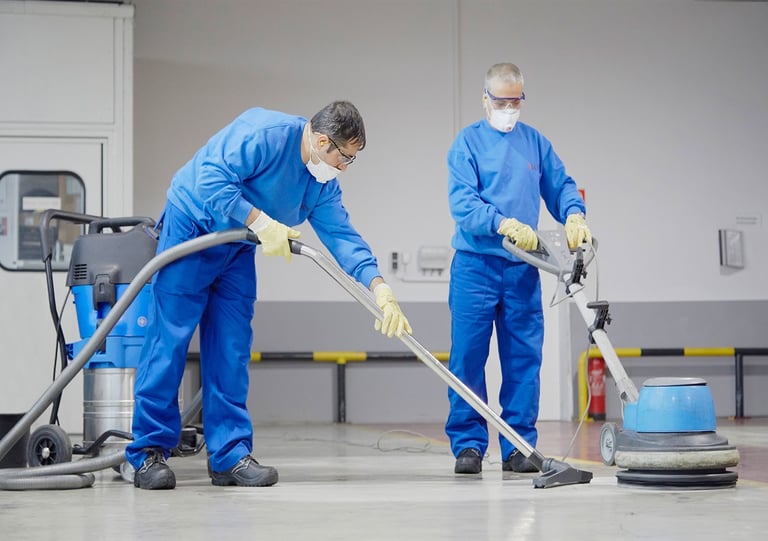
Special Equipment and Chemicals:
Unlike standard cleaning, specially formulated industrial cleaning products and fully automated cleaning systems are used to effectively remove stubborn contamination without damaging cleaned surfaces or machinery systems. These processes also involve the use of professional disinfectants.
Hygiene and Disinfection:
Hygiene and disinfection are of critical importance, especially for facilities operating in the food and healthcare sectors.
Regular industrial cleaning improves working environment conditions, protects employee health, increases productivity, reduces the risk of accidents, and minimizes machinery and equipment failures.
Communication
Contact us
Address: Yayla, özaydın, no:18,4, 34944, Tuzla, İstanbul, Turkiye
info@guvencleanex.com
GSM+ WhatsApp+90 5323937877
© 2025. All rights reserved.
GSM+ WhatsApp+90 5325665086
Follow us on social media and leave your comments.